Bridge the Gap: Injection Molding for Prototype to Production with Prodimode
Seamlessly transition from prototypes to mass-produced parts with our expert injection molding services.
The Prototype to Production Dilemma
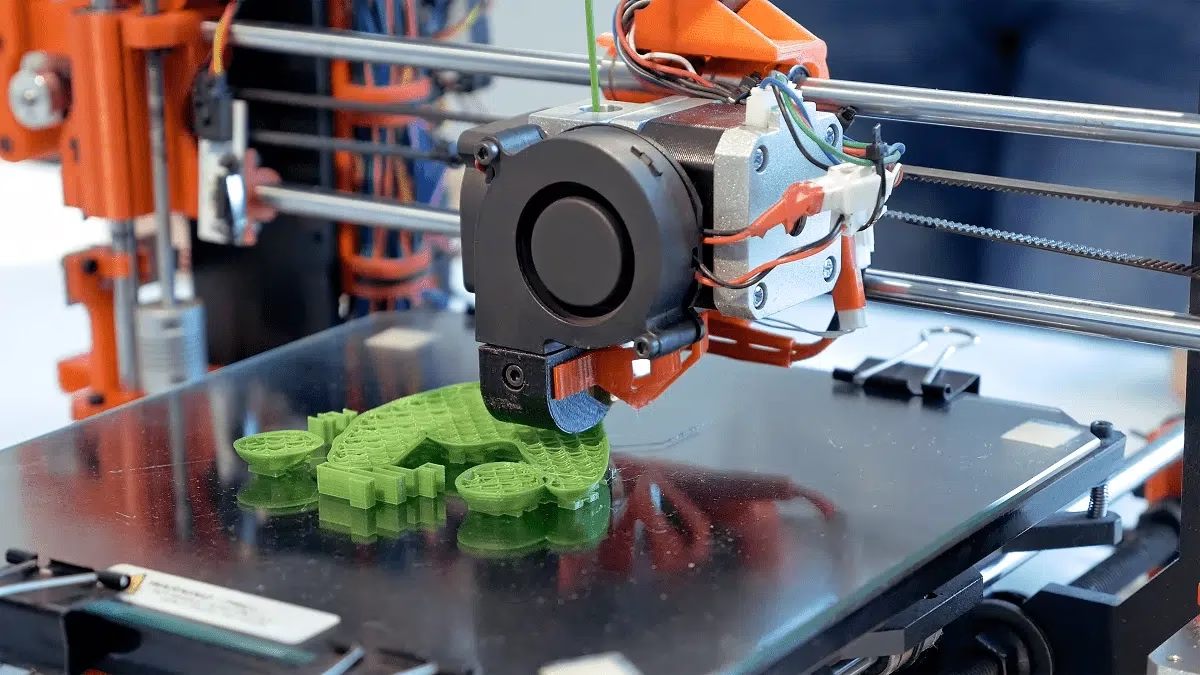
Many businesses face a critical challenge: bridging the gap between initial prototypes and full-scale production. 3D printing excels at creating functional prototypes and low-volume custom parts. However, as demand increases, 3D printing becomes less cost-effective and struggles to meet the required quantities and material properties. This is where injection molding steps in, offering a pathway to higher volumes while maintaining quality and reducing per-unit costs.
Injection molding is a manufacturing process that involves injecting molten material, typically plastic, into a mold cavity. After cooling and solidifying, the part is ejected. This method is ideal for producing large quantities of identical parts with consistent quality, tight tolerances, and a wide range of material options not always available in 3D printing. Prodimode’s injection molding service is specifically designed to address this transition, providing a cost-effective solution for scaling your production.
When Does Injection Molding Make Sense?
Knowing when to switch from 3D printing to injection molding is crucial for optimizing your manufacturing process. Consider injection molding when:
- Production volume exceeds a certain threshold: As a general rule, if you need hundreds or thousands of parts, injection molding becomes more economical than 3D printing.
- Material properties are critical: Injection molding offers a wider selection of materials with superior strength, durability, and resistance to heat, chemicals, and UV exposure compared to 3D printing materials.
- Surface finish and aesthetics matter: Injection molding produces parts with smoother surfaces and finer details than 3D printing, making it suitable for consumer products and applications where appearance is important.
- Cost per part needs to be minimized: While the initial tooling cost for injection molding can be significant, the per-part cost decreases dramatically as production volume increases.
If you’re currently using 3D printing for production and experiencing limitations in volume, material, or cost, it’s time to explore injection molding with Prodimode.
Tooling Options for Every Budget and Volume
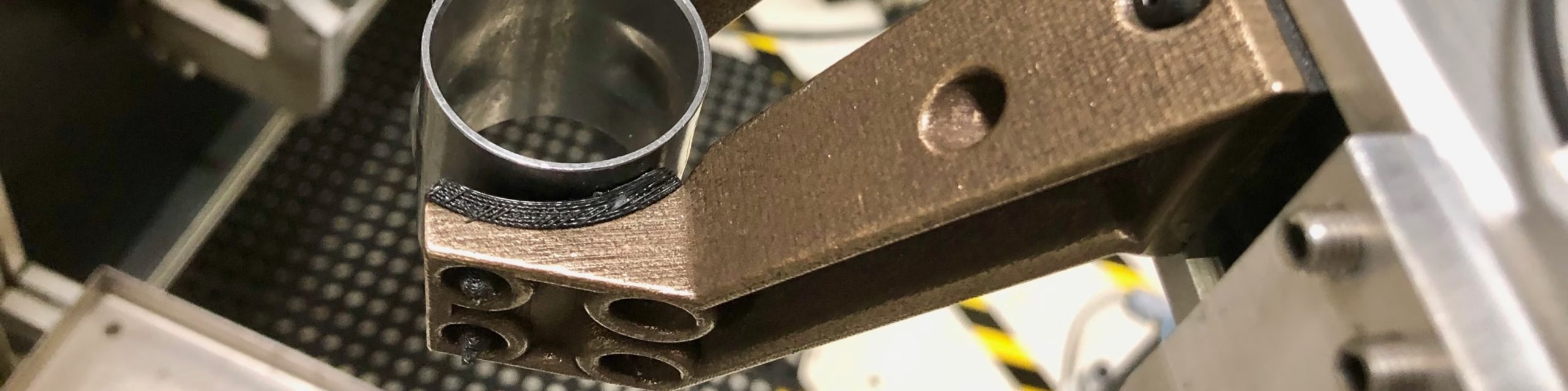
The mold, or tooling, is the heart of the injection molding process. Prodimode offers a range of tooling options to suit different production volumes and budgets:
- Aluminum Tooling: Ideal for low-volume production runs (hundreds to a few thousand parts), aluminum tooling offers a cost-effective solution with faster lead times compared to steel tooling.
- Steel Tooling: Designed for high-volume production (thousands to millions of parts), steel tooling provides superior durability and dimensional accuracy, ensuring consistent part quality over long production runs.
- Bridge Tooling: A hybrid approach that combines the speed of aluminum tooling with the durability of steel inserts in critical areas. This option is suitable for medium-volume production and allows for design modifications during the early stages of production.
Prodimode’s team of experienced engineers will work with you to determine the optimal tooling solution based on your specific requirements, ensuring the best balance of cost, lead time, and part quality.
Material Selection: Choosing the Right Plastic for Your Application
The choice of material is a crucial aspect of injection molding, as it directly impacts the part’s performance, durability, and aesthetics. Prodimode offers a wide array of thermoplastic resins to meet diverse application needs, including:
- ABS (Acrylonitrile Butadiene Styrene): A versatile and cost-effective material with good impact resistance and dimensional stability.
- Polycarbonate (PC): A high-performance material with excellent impact strength, heat resistance, and optical clarity.
- Polypropylene (PP): A lightweight and chemically resistant material suitable for a wide range of applications.
- Nylon (Polyamide): A strong and durable material with good resistance to abrasion and chemicals.
- TPE (Thermoplastic Elastomer): A flexible and rubber-like material with good elasticity and tear resistance.
Our material experts can guide you in selecting the optimal resin based on your part’s functional requirements, regulatory compliance, and aesthetic preferences.
Getting Started with Prodimode: Instant Quotes and Expert Support
Transitioning from prototyping to production has never been easier with Prodimode. Our online platform allows you to upload your 3D CAD files and receive an instant quote for injection molding. Simply upload your design, specify your desired material and quantity, and our system will generate a detailed quote with transparent pricing.
In addition to our instant quoting tool, Prodimode offers expert support throughout the entire process. Our team of experienced engineers and manufacturing specialists will work closely with you to optimize your design for manufacturability, select the appropriate tooling and materials, and ensure the highest quality standards are met. We provide comprehensive support from initial design review to final part inspection, ensuring a seamless and successful production experience.
Key Takeaways
- Injection molding service
- Prototype to production
- Low volume injection molding
- Manufacturing
- Tooling
- Rapid prototyping