
GoMy3D Material Deep Dive: Choosing the Right Filament for Your 3D Printing Needs
A comprehensive guide to GoMy3D's extensive range of 3D printing materials, empowering you to select the perfect option for your project.
Introduction to GoMy3D's Material Universe
GoMy3D offers a comprehensive selection of 3D printing materials, catering to a wide spectrum of applications. Whether you’re prototyping, creating functional parts, or producing end-use products, understanding the unique properties of each material is crucial for achieving optimal results. This guide provides an in-depth look at GoMy3D’s material offerings, covering FDM filaments, SLS powders, and MJF powders, helping you make informed decisions for your next 3D printing project. We’ll explore the strengths and weaknesses of each material, highlighting their ideal applications and providing valuable insights for successful printing.
From high-performance composites to flexible polymers and robust metals, GoMy3D provides solutions for diverse industries, including aerospace, automotive, healthcare, and consumer goods. By leveraging the right material, you can unlock the full potential of 3D printing and create innovative products with enhanced functionality and durability. Let’s dive in and explore the exciting world of GoMy3D materials!
FDM Filaments: A Detailed Overview
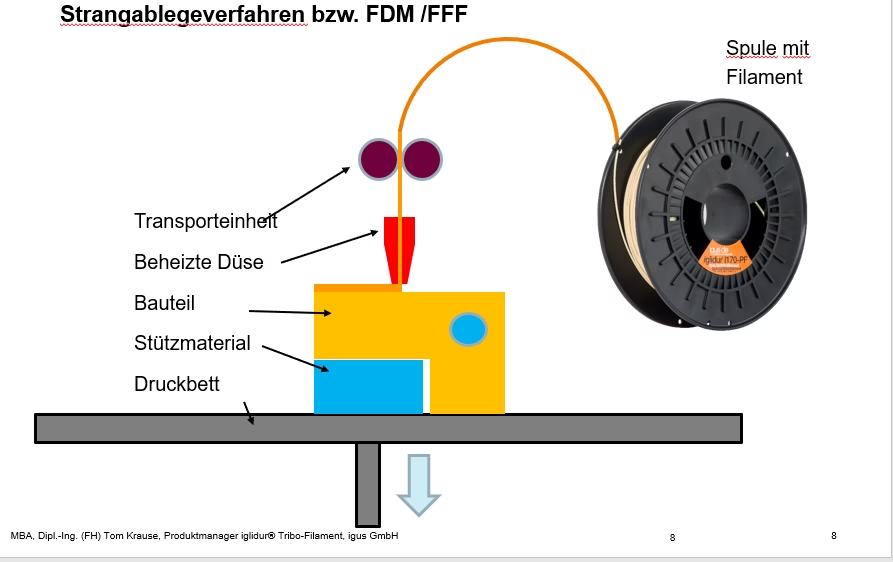
Fused Deposition Modeling (FDM) is a widely used 3D printing technology, and GoMy3D offers a variety of filaments to suit different FDM applications. Here’s a breakdown of some key materials:
- Hyper Speed PLA-CF (Carbon Fiber Reinforced PLA): This composite material combines the ease of printing of PLA with the enhanced strength and stiffness of carbon fiber. It’s ideal for applications requiring high rigidity and low weight, such as UAV components, jigs and fixtures, and demanding structural parts. The carbon fiber reinforcement also improves dimensional stability and reduces warping.
- Hyper Speed PLA: A modified PLA known for its faster printing speeds and excellent surface finish. It’s a great general-purpose material for prototyping and creating aesthetically pleasing parts.
- Flexi TPU (85A, 92A, 95A): Thermoplastic Polyurethane (TPU) offers excellent flexibility and elasticity. The different Shore hardness values (85A, 92A, 95A) indicate varying degrees of flexibility, with 85A being the most flexible and 95A the least. Applications include seals, gaskets, flexible housings, and wearable devices.
- ABS: A strong and durable thermoplastic known for its heat resistance and impact strength. It’s suitable for functional prototypes, automotive parts, and enclosures.
- ASA: Similar to ABS but with improved UV resistance, making it ideal for outdoor applications. ASA retains its color and mechanical properties even when exposed to sunlight.
- PC (Polycarbonate): A high-performance thermoplastic with exceptional strength, impact resistance, and heat resistance. It’s used in demanding applications such as automotive components, electrical housings, and safety equipment.
- Nylon 11 & 12: These polyamides offer excellent toughness, chemical resistance, and wear resistance. Nylon 11 is more flexible than Nylon 12. Applications include gears, bearings, and functional prototypes.
Metal Filaments: Expanding the Possibilities
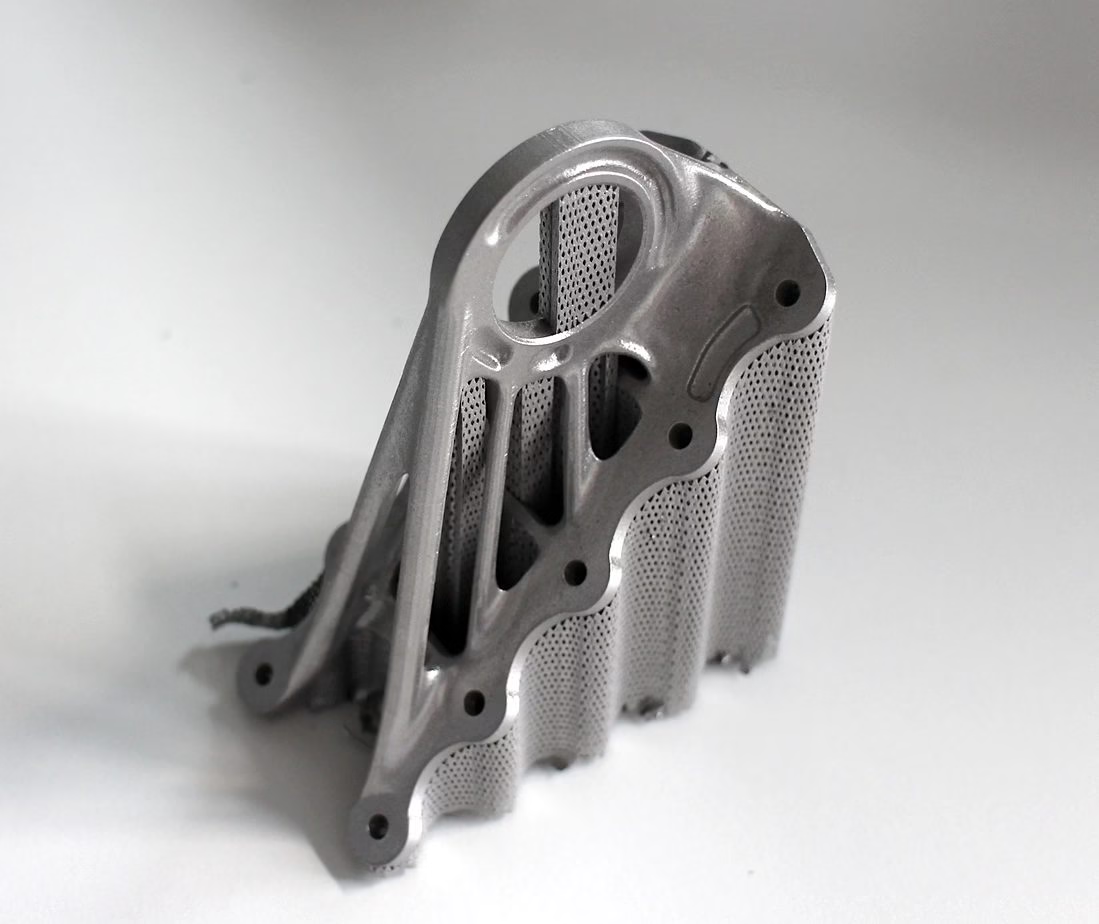
GoMy3D also offers metal filaments, opening up new possibilities for FDM 3D printing. These filaments are typically composed of metal powder bound in a polymer matrix. After printing, the parts undergo a debinding and sintering process to remove the binder and fuse the metal particles together.
- Stainless Steel 17-4PH: A precipitation-hardening stainless steel known for its high strength, hardness, and corrosion resistance. It’s used in a wide range of applications, including tooling, fixtures, and functional parts requiring high durability.
- Copper: Offers excellent thermal and electrical conductivity, making it suitable for heat sinks, electrical connectors, and other applications where conductivity is critical.
When working with metal filaments, it’s essential to follow the manufacturer’s recommended debinding and sintering procedures to achieve the desired mechanical properties and density. These post-processing steps are crucial for realizing the full potential of metal FDM printing.
SLS and MJF Powders: Production-Grade Solutions
Selective Laser Sintering (SLS) and Multi Jet Fusion (MJF) are powder bed fusion technologies that enable the production of complex geometries and functional parts with excellent mechanical properties. GoMy3D offers high-quality powders for both SLS and MJF processes.
- SLS Nylon PA12: A versatile material known for its high strength, toughness, and chemical resistance. It’s widely used for functional prototypes, end-use parts, and complex geometries. SLS Nylon PA12 offers excellent dimensional accuracy and surface finish.
- MJF Nylon PA12: Similar to SLS Nylon PA12, MJF Nylon PA12 provides excellent mechanical properties and dimensional accuracy. MJF technology offers faster build speeds and potentially lower costs compared to SLS, making it a suitable choice for larger production volumes.
- Polypropylene (PP): Known for its chemical resistance, flexibility and low density, polypropylene is an engineering plastic commonly used in a wide range of applications from automotive to consumer products.
The key difference between SLS and MJF lies in the energy source used to fuse the powder particles. SLS uses a laser, while MJF uses an inkjet array to selectively apply fusing and detailing agents, followed by a heating process. Both technologies offer excellent results, but the choice between them depends on factors such as part complexity, production volume, and desired surface finish.
Material Selection Considerations
Choosing the right 3D printing material involves careful consideration of several factors:
- Application Requirements: What are the mechanical, thermal, and chemical requirements of the part?
- Functional Requirements: What specific functions must the part perform? (e.g., load-bearing, sealing, conductivity)
- Environmental Conditions: Will the part be exposed to extreme temperatures, chemicals, or UV radiation?
- Production Volume: Is it a one-off prototype or a high-volume production run?
- Cost: What is the budget for materials and manufacturing?
By carefully evaluating these factors, you can narrow down your material options and select the best choice for your specific needs. Don’t hesitate to consult with GoMy3D’s material experts for guidance and recommendations.
Optimizing Your 3D Printing Process with the Right Material
Selecting the right material is only half the battle. Optimizing your 3D printing process is equally crucial for achieving successful results. This involves fine-tuning print parameters such as layer height, print speed, temperature, and support structures. Each material has its own optimal settings, so it’s essential to consult the manufacturer’s recommendations and conduct thorough testing. For example, Hyper Speed PLA requires faster speeds and adjusted temperatures to achieve the best results. Flexible TPUs benefit from slower print speeds and optimized retraction settings to prevent stringing. Metal filaments require precise debinding and sintering procedures to achieve the desired density and mechanical properties.
By carefully optimizing your 3D printing process, you can minimize defects, improve part accuracy, and maximize the performance of your chosen material. Experimentation and iteration are key to finding the sweet spot for each material and application.
Key Takeaways
- 3D printing materials guide
- FDM materials
- SLS vs MJF materials
- 3D printing filaments
- GoMy3D materials