Unlock Efficiency: How DFM Analysis Saves Thousands in 3D Printing
Optimize your 3D printed designs and avoid expensive mistakes with Design for Manufacturability analysis.
What is Design for Manufacturability (DFM) Analysis?
Design for Manufacturability (DFM) analysis is a critical process used to evaluate a product’s design for potential manufacturing challenges. In the context of 3D printing, DFM analysis examines a 3D model to identify features that may be difficult, costly, or even impossible to produce using a specific 3D printing technology. This analysis considers factors such as minimum feature size, overhang angles, support structures, material properties, and printer capabilities.
The goal of DFM analysis is to optimize the design before production begins, ensuring that the final part meets the required specifications and can be manufactured efficiently and cost-effectively. It helps identify potential issues early in the design process, allowing for modifications and improvements that prevent costly redesigns and production delays later on.
Essentially, DFM bridges the gap between design intent and manufacturing reality. It’s about proactively addressing potential problems and creating a smoother, more predictable path to successful 3D printing.
Why DFM Analysis Matters for 3D Printing Businesses
In the fast-paced world of 3D printing, time is money. DFM analysis directly impacts your bottom line by minimizing risks and optimizing resource allocation. Ignoring DFM can lead to a cascade of problems, including:
- Failed Prints: Designs with unsupported overhangs or excessively thin walls are prone to failure during printing.
- Increased Material Waste: Repeated print failures consume valuable material and increase overall costs.
- Post-Processing Challenges: Complex geometries may require extensive and costly post-processing, such as support removal.
- Delayed Production Schedules: Redesigning parts after failed prints causes significant delays in project timelines.
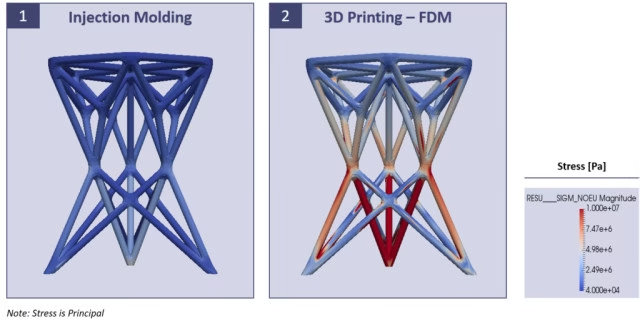
- Compromised Part Performance: Unoptimized designs may result in parts that are weaker or less durable than intended.
By incorporating DFM analysis into your workflow, you can mitigate these risks, streamline your production process, and deliver high-quality 3D printed parts on time and within budget. It’s an investment that pays dividends in terms of efficiency, cost savings, and customer satisfaction.
The Benefits of a Proactive DFM Review
A proactive DFM review, conducted before you commit to production, offers a wealth of benefits. It’s like having an expert 3D printing consultant analyze your design and provide actionable recommendations for improvement. Here are some key advantages:
- Early Issue Detection: Identify and resolve potential manufacturing problems before they become costly issues.
- Design Optimization: Refine your design to maximize printability, minimize material usage, and improve part performance.
- Cost Reduction: Eliminate unnecessary support structures, reduce print times, and prevent costly redesigns.
- Improved Part Quality: Ensure that your parts meet the required specifications and performance criteria.
- Faster Time-to-Market: Streamline your production process and accelerate your product development cycle.
By addressing manufacturability concerns early on, you can avoid the frustration and expense of dealing with problems later in the production process. A DFM review is a proactive step that can save you significant time, money, and resources.
How Prodimode's Free DFM Review Can Save You Thousands
Prodimode understands the importance of DFM analysis, and that’s why we offer a free DFM review to all our customers. Our team of experienced 3D printing engineers will thoroughly analyze your design and provide you with a detailed report highlighting potential manufacturability issues and recommendations for improvement.
This free service can save you thousands of dollars by preventing costly redesigns, reducing material waste, and optimizing your production process. We’ll help you identify areas where you can:
- Reduce support material
- Optimize part orientation
- Improve surface finish
- Increase part strength
Our DFM review is a no-obligation service that provides you with valuable insights into your design’s manufacturability. It’s a risk-free way to ensure that your 3D printed parts are produced efficiently, cost-effectively, and to the highest standards of quality. Don’t start production without it!
Key Considerations During DFM Analysis
When conducting a DFM analysis for 3D printing, several key factors need careful consideration. These include:
- Minimum Feature Size: Ensure that all features in your design meet the minimum size requirements of the chosen 3D printing technology.
- Overhang Angles: Minimize overhang angles to reduce the need for support structures, which can increase material usage and post-processing time.
- Wall Thickness: Maintain adequate wall thickness to ensure part strength and prevent warping or distortion during printing.
- Material Properties: Select a material that is suitable for the intended application and compatible with the chosen 3D printing technology.
- Printer Capabilities: Consider the build volume, resolution, and other capabilities of the 3D printer to ensure that it can accurately produce your design.
By carefully evaluating these factors during DFM analysis, you can optimize your design for manufacturability and achieve the best possible results.
Key Takeaways
- Design for manufacturability
- DFM analysis
- 3D printing
- Manufacturing design review
- Rapid prototyping