The Ultimate Guide to GoMy3D's Advanced 3D Printing Materials
A comprehensive overview of GoMy3D's diverse 3D printing material options, empowering you to choose the perfect filament or powder for any application.
Introduction to GoMy3D's Material Portfolio
GoMy3D offers a comprehensive range of 3D printing materials, catering to diverse engineering and prototyping needs. Whether you’re using Fused Deposition Modeling (FDM), Selective Laser Sintering (SLS), or Multi Jet Fusion (MJF), GoMy3D has a material to match your requirements. This guide provides an in-depth look at each material, highlighting its properties, applications, and benefits. Choosing the right material is crucial for a successful 3D printing project. Understanding the strengths and weaknesses of each option allows you to optimize your designs and achieve the desired performance characteristics. From high-strength carbon fiber composites to flexible elastomers and durable metals, GoMy3D’s selection ensures you have the tools to bring your ideas to life.
This article will help you navigate the complex world of 3D printing materials and make informed decisions. We’ll cover everything from common plastics like PLA and ABS to advanced materials like stainless steel and nylon, providing practical insights into their uses and limitations. Whether you’re a hobbyist, a professional engineer, or a business owner, this guide will empower you to select the best material for your specific application.
FDM Materials: From Everyday to High-Performance
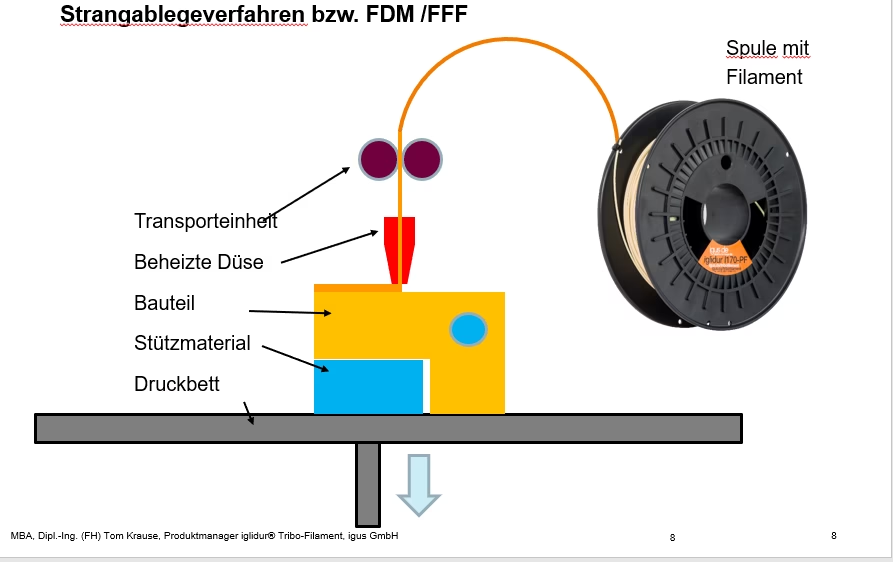
Fused Deposition Modeling (FDM) is a widely accessible 3D printing technology, and GoMy3D offers a variety of filaments to suit different FDM printers and applications. Let’s explore some key FDM materials:
- Hyper Speed PLA-CF: This carbon fiber reinforced PLA composite is engineered for high strength and stiffness while maintaining ease of printing. It’s ideal for UAV components, jigs, fixtures, and other demanding applications where weight and rigidity are critical. The carbon fiber reinforcement significantly enhances the material’s mechanical properties, making it a superior alternative to standard PLA.
- Flexi TPU (85A, 92A, 95A): Thermoplastic Polyurethane (TPU) offers excellent flexibility and elasticity. GoMy3D provides several durometer options (85A, 92A, and 95A) to fine-tune the flexibility of your parts. Softer TPUs (85A) are great for seals and gaskets, while harder TPUs (95A) are suitable for flexible housings and vibration dampening components.
- Hyper Speed PLA: A faster printing PLA formulation that allows for increased printing speeds without sacrificing part quality. This is a good all-around material for rapid prototyping and general-purpose 3D printing.
- ABS: Acrylonitrile Butadiene Styrene (ABS) is a tough, impact-resistant plastic commonly used in automotive parts, consumer electronics, and enclosures. It offers good heat resistance and durability.
- ASA: Acrylonitrile Styrene Acrylate (ASA) is similar to ABS but offers improved UV resistance, making it suitable for outdoor applications. It’s commonly used in outdoor signage, garden furniture, and automotive exterior components.
- PC: Polycarbonate (PC) is a high-strength, heat-resistant plastic known for its exceptional impact resistance. It’s used in safety glasses, automotive lighting, and electrical connectors.
- Nylon 11 & 12: Nylon 11 and 12 are durable, flexible, and chemical-resistant polyamides. They offer excellent abrasion resistance and are commonly used in gears, bearings, and living hinges.
Metal 3D Printing: Stainless Steel and Copper
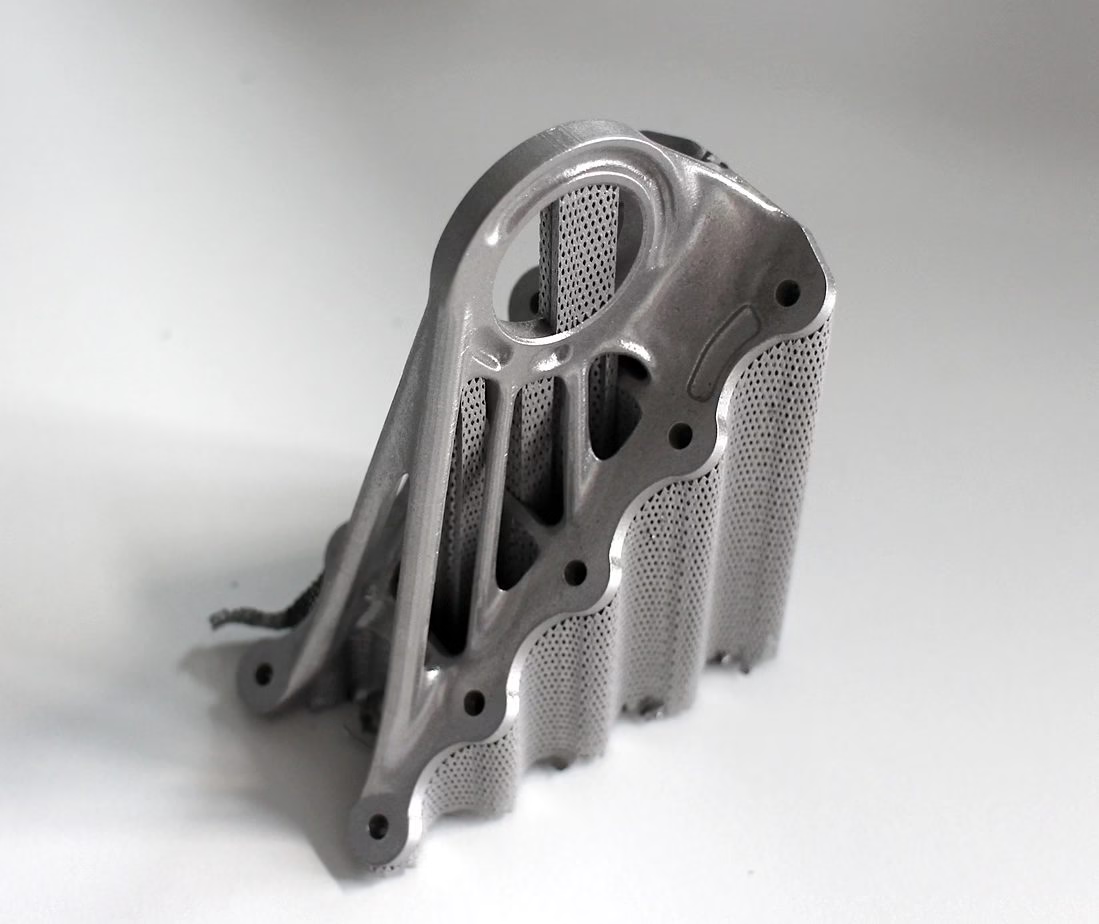
GoMy3D expands its material offerings beyond polymers to include metal 3D printing options, specifically Stainless Steel 17-4PH and Copper. These materials open up new possibilities for functional parts with demanding mechanical and thermal requirements.
- Stainless Steel 17-4PH: This precipitation-hardening stainless steel offers high strength, hardness, and corrosion resistance. It’s ideal for tooling, fixtures, medical devices, and aerospace components. Stainless Steel 17-4PH parts are typically sintered after printing to achieve their final mechanical properties.
- Copper: Copper boasts excellent thermal and electrical conductivity, making it suitable for heat sinks, electrical connectors, and induction coils. 3D printed copper parts can be used in various electrical and thermal management applications.
Note that metal FDM printing typically involves a binder jetting process, where metal powder is bound together with a binder material during printing, followed by a sintering process to remove the binder and fuse the metal particles together.
Powder Bed Fusion: SLS, MJF, and Polypropylene
Selective Laser Sintering (SLS) and Multi Jet Fusion (MJF) are powder bed fusion technologies that offer unique advantages for producing complex geometries and functional parts. GoMy3D offers SLS Nylon PA12, MJF Nylon PA12, and Polypropylene (PP) for these processes.
- SLS Nylon PA12: This is a strong, durable, and versatile material widely used in SLS 3D printing. It offers good chemical resistance and dimensional stability, making it suitable for functional prototypes, end-use parts, and complex assemblies.
- MJF Nylon PA12: Similar to SLS Nylon PA12, MJF Nylon PA12 offers excellent mechanical properties and dimensional accuracy. MJF typically produces parts with finer details and smoother surfaces compared to SLS.
- Polypropylene (PP): PP is a lightweight, chemical-resistant, and flexible thermoplastic. It’s commonly used in packaging, containers, and automotive components. 3D printed PP parts offer good impact resistance and can withstand repeated bending and flexing.
The key difference between SLS and MJF lies in the energy source used to fuse the powder particles. SLS uses a laser, while MJF uses an inkjet array to selectively apply fusing and detailing agents, followed by infrared energy to fuse the powder. This results in parts with different surface finishes and mechanical properties.
Choosing the Right Material for Your Application
Selecting the optimal 3D printing material is a critical step in any project. Consider these factors when making your decision:
- Mechanical Properties: Strength, stiffness, flexibility, impact resistance, and elongation at break are crucial considerations for functional parts.
- Thermal Properties: Heat resistance and thermal conductivity are important for applications involving high temperatures or heat dissipation.
- Chemical Resistance: Consider the exposure to chemicals, solvents, and other substances that the part will encounter.
- Environmental Factors: UV resistance, moisture resistance, and temperature stability are important for outdoor applications.
- Cost: Material costs vary significantly, so factor this into your budget.
- Printing Technology: Different materials are compatible with different 3D printing technologies (FDM, SLS, MJF).
By carefully evaluating these factors, you can narrow down your material options and select the best choice for your specific needs. Don’t hesitate to consult with GoMy3D’s experts for guidance on material selection.
Leveraging SeekMake for Material Cost Estimation
Once you’ve identified potential materials, SeekMake can help you estimate the cost of your 3D printing project. Our platform allows you to upload your 3D model, select your desired material and printing parameters, and instantly receive a price quote. This simplifies the budgeting process and helps you make informed decisions about material selection and design optimization. SeekMake’s cost estimation tools consider factors such as material volume, print time, and post-processing requirements, providing a comprehensive overview of the total cost of your project. By using SeekMake, you can avoid unexpected expenses and ensure that your 3D printing project stays within budget.
Furthermore, SeekMake allows you to compare prices from different 3D printing service providers, enabling you to find the most competitive rates for your chosen material and technology. This transparency empowers you to make cost-effective decisions and maximize the value of your 3D printing investment. Explore SeekMake today and discover how it can streamline your 3D printing workflow.
Key Takeaways
- 3D printing materials guide
- FDM materials
- SLS materials
- MJF materials
- GoMy3D