
Slow Turnaround Kills Momentum: How Rapid Prototyping Fuels Innovation
Don't let slow part turnaround stall your product development and kill your momentum. Rapid prototyping is the key to staying ahead.
The Crippling Effect of Slow Part Turnaround
In today’s hyper-competitive market, speed is everything. A slow part turnaround can have a devastating impact on your product development cycle, creating a ripple effect of delays and missed opportunities. Imagine waiting weeks for a prototype, only to discover a critical flaw that requires a complete redesign. This delay not only pushes back your testing schedule but also consumes valuable resources and erodes team morale.
The consequences extend far beyond just the immediate project. Delayed testing leads to a lack of critical data, hindering informed decision-making and increasing the risk of costly mistakes down the line. Missed funding milestones can jeopardize your financial runway, forcing you to scale back your ambitions or even abandon promising projects altogether. Ultimately, a slow turnaround translates to a slower time-to-market, handing your competitors a significant advantage.
Delayed Testing: A Recipe for Disaster
Testing is the lifeblood of product development. It’s how you validate your designs, identify potential problems, and ensure that your product meets the needs of your target audience. When part turnaround is slow, testing becomes a bottleneck, delaying the entire process and preventing you from gathering crucial feedback. Imagine launching a product only to discover critical flaws that could have been easily identified with timely prototype testing. The cost of fixing these issues after launch can be astronomical, both in terms of financial resources and reputational damage.
Furthermore, delayed testing can stifle innovation. When engineers and designers have to wait weeks for prototypes, they are less likely to experiment with new ideas and push the boundaries of what’s possible. This can lead to a culture of risk aversion, where teams are afraid to try new things for fear of causing further delays. The result is a less innovative product and a missed opportunity to gain a competitive edge.
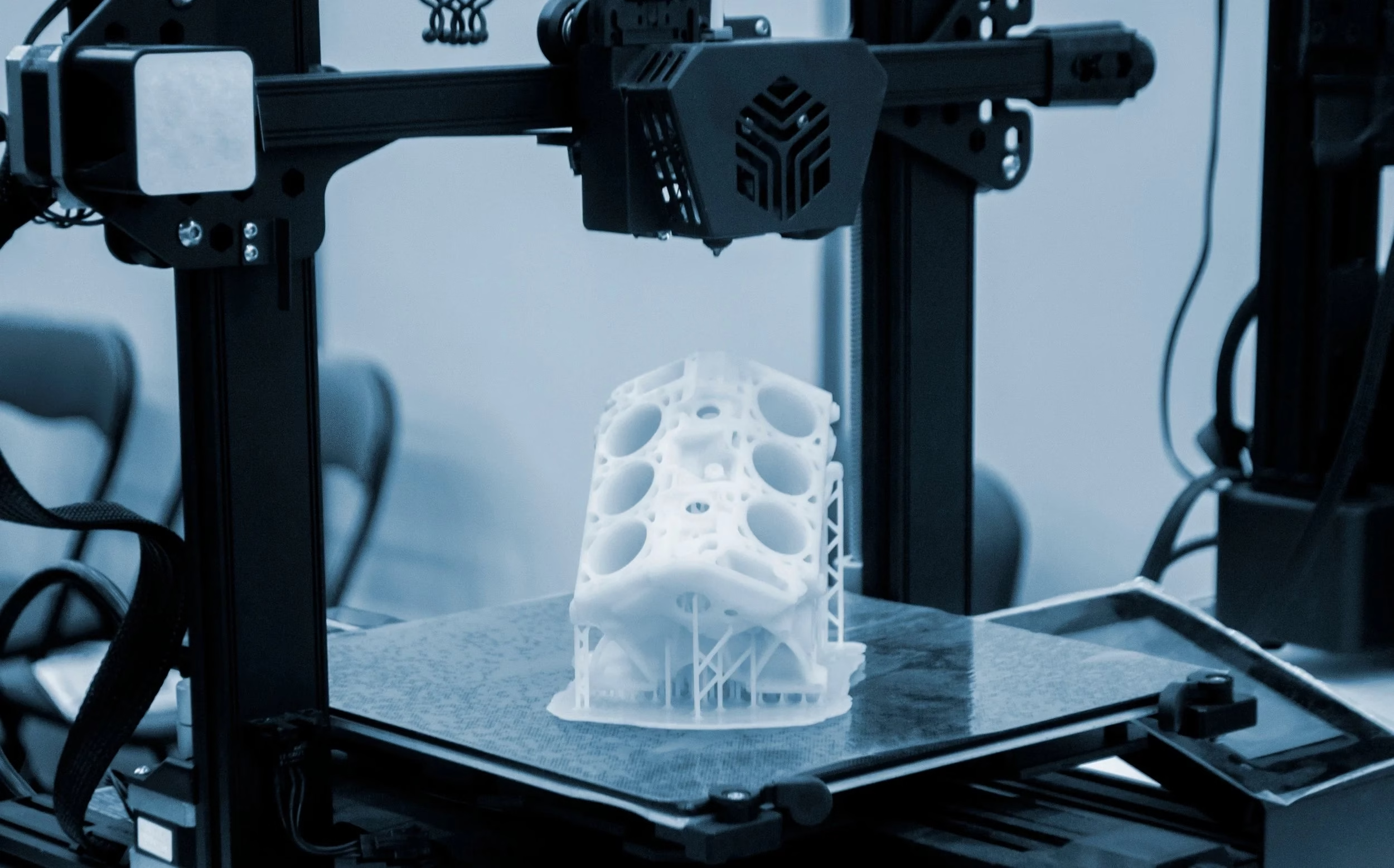
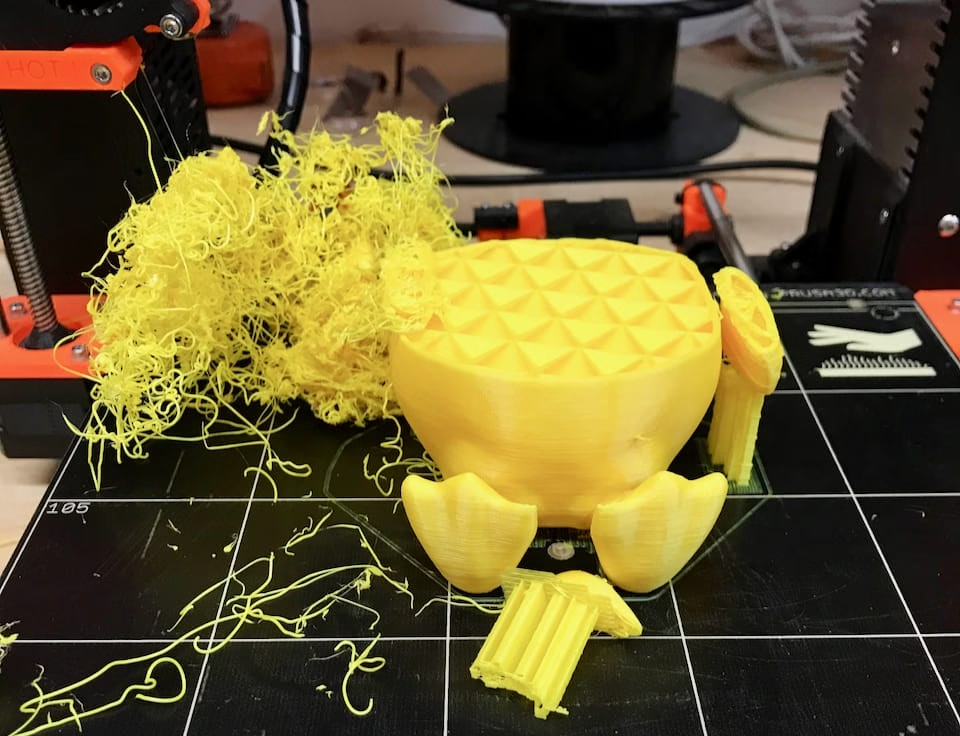
Missed Funding Milestones: The Financial Fallout
For startups and growing companies, securing funding is essential for survival. Investors want to see progress, and they expect you to hit certain milestones within a specific timeframe. When part turnaround is slow, it becomes difficult to meet these milestones, jeopardizing your chances of securing the funding you need to grow your business. Imagine pitching your product to investors and having to explain why you’re behind schedule due to delays in prototyping. This can raise red flags and make investors question your ability to execute your vision.
Moreover, missed funding milestones can create a downward spiral. Without adequate funding, you may be forced to cut corners, reduce your team size, or delay critical projects. This can further slow down your product development cycle and make it even harder to catch up. To avoid this scenario, it’s crucial to prioritize speed and efficiency in your prototyping process.
Slower Time-to-Market: Giving Your Competitors the Edge
In today’s fast-paced market, time-to-market is a critical factor in determining success. The faster you can get your product to market, the sooner you can start generating revenue, building brand awareness, and capturing market share. Slow part turnaround can significantly delay your time-to-market, giving your competitors a significant advantage. Imagine launching your product months after your competitors, only to find that they have already captured a significant portion of the market. This can make it incredibly difficult to catch up and compete effectively.
Furthermore, a slower time-to-market can erode your first-mover advantage. Being the first to market with a new product or technology can give you a significant edge, allowing you to establish yourself as a leader in your industry. However, if you’re slow to market, you risk losing this advantage to competitors who are faster and more agile.
Prodimode: Your Competitive Advantage in Rapid Prototyping
Prodimode understands the critical importance of speed in product development. That’s why we offer a 1-2 day turnaround on 3D printed parts, empowering you to iterate faster, test more thoroughly, and accelerate your time-to-market. Our rapid prototyping services enable you to quickly validate your designs, identify potential problems, and make informed decisions, all without the crippling delays associated with traditional manufacturing methods. With Prodimode, you can say goodbye to weeks-long waits and hello to a streamlined, efficient prototyping process that fuels innovation and drives success.
By partnering with Prodimode, you gain a competitive edge in the market. Our fast turnaround times allow you to stay ahead of the curve, respond quickly to changing market demands, and capture new opportunities before your competitors do. Don’t let slow part turnaround hold you back. Choose Prodimode and unlock the power of rapid prototyping.
Real-World Impact: How Fast Turnaround Transforms Product Development
The benefits of fast turnaround extend beyond just speed. It fosters a culture of experimentation and innovation. When engineers and designers can quickly receive prototypes, they are more likely to explore new ideas, test different approaches, and push the boundaries of what’s possible. This leads to more innovative products and a stronger competitive advantage. Furthermore, fast turnaround improves team collaboration and communication. When everyone is working with the latest prototypes, it’s easier to share feedback, identify problems, and make collective decisions. This leads to a more cohesive and efficient product development process.
Consider the case of a medical device company that used Prodimode to rapidly prototype a new surgical instrument. By receiving prototypes in just 1-2 days, they were able to quickly iterate on their design, identify potential safety issues, and ultimately bring a safer and more effective product to market. This not only improved patient outcomes but also enhanced the company’s reputation and market share.
Key Takeaways
- Fast manufacturing turnaround
- Rapid prototyping speed
- Reduce time to market
- 3D printing services
- Product development
- Prototyping
- Manufacturing